8 June 2026 · 9 min read
What Is Diamond Art? A Complete Beginner's Explanation
You've probably scrolled past a video of someone pressing tiny sparkly squares onto a canvas and wondered what on earth that craft is called. The answer is diamond art, sometimes called diamond painting, and it's one of the most relaxing, addictive hobbies to pick up if you like slow, hands-on projects with a genuinely beautiful payoff.
In this guide we explain exactly what diamond art is, what's inside a kit, how the process actually works, and why it has become such a popular alternative to knitting, cross-stitch, or adult coloring books. By the end you'll know everything you need to decide if it's for you.
Diamond art meaning: where the name comes from
The name 'diamond art' comes from the small faceted resin pieces used to fill in the design, called drills or gems. They're cut with flat facets, just like a cut diamond, so they catch and reflect light from every angle. They aren't real diamonds or crystals; they're high-refraction resin, but the sparkle effect is very close to rhinestone jewelry.
'Diamond painting' is simply the other common name for the exact same craft. Both terms describe the same process: filling a printed, numbered canvas with colored gems instead of paint, thread, or beads.
What's inside a diamond art kit
Every diamond art kit is built around the same core set of materials, though the specific canvas design and gem shape can vary between brands. Here's what you'll typically find in a well-made kit.
- Numbered canvas. A sticky, adhesive canvas printed with a full-color preview and tiny numbered symbols that mark exactly where each gem color goes.
- Resin gems (drills). Small faceted pieces sorted by color and numbered code, usually with a bit of surplus in case a few get lost.
- Applicator pen. A pen-like tool tipped with wax that picks up one gem at a time so you can place it precisely.
- Wax. A soft adhesive block you press the pen tip into so the gems stick to it before placement.
- Sorting tray. A small tray with compartments to keep each gem color organized while you work.
How the process actually works, step by step
The mechanics of diamond art are simple enough for a complete beginner to pick up in minutes. You peel back a small section of the plastic film covering the canvas, revealing the sticky surface underneath. Then, using the applicator pen dipped in wax, you pick up a gem and press it onto the matching numbered symbol.
You keep working section by section, peeling back a bit more film as you fill each area, until the entire canvas is covered in gems. There's no drawing, no mixing colors, and no need for a steady painting hand: the canvas does the guiding for you.
| Step | What you do |
|---|---|
| 1. Prep | Unroll the canvas and sort gems by number into the tray |
| 2. Peel | Remove a small section of the protective film |
| 3. Pick up | Dip the pen tip in wax and lift one gem |
| 4. Place | Press the gem onto its matching numbered symbol |
| 5. Finish | Repeat until the canvas is fully covered, then smooth and, if you like, frame it |
Round drills vs. square drills
Diamond art gems come in two main shapes, and the difference matters more than you might expect. Round drills are easier to place because they're more forgiving of small misalignments, which makes them a favorite for beginners. Square drills fit together edge to edge with no gaps, giving a denser, more uniform sparkle once the canvas is finished.
Neither one is objectively better: it comes down to whether you want an easier, faster pace or the fully-tiled, mosaic-like finish that square drills give. We cover this in more depth in our comparison of round vs. square drills.
Diamond art vs. other similar crafts
It's easy to confuse diamond art with cross-stitch, paint by numbers, or mosaic kits, since they share the same basic idea of building an image piece by piece. The table below breaks down the key differences.
| Craft | Material used | Skill needed |
|---|---|---|
| Diamond art | Faceted resin gems | None, just patience |
| Paint by numbers | Acrylic paint and brushes | Basic brush control |
| Cross-stitch | Thread and needle | Stitching technique |
| Mosaic kits | Tile or glass pieces | Cutting and placing precision |
Why so many people find diamond art relaxing
The repetitive, low-stakes nature of placing gem after gem is a big part of the appeal. There's no risk of ruining the piece with a wrong brushstroke, no drying time to worry about, and you can pick it up and put it down whenever you like without losing your place. Many people describe it as a form of mindfulness they can do in front of the TV or while chatting with friends.
It's also a project you can genuinely finish and display, unlike some crafts that stay half-done in a drawer. A finished diamond art canvas has real presence on a wall, which makes the time invested feel worthwhile.
Choosing your first diamond art kit
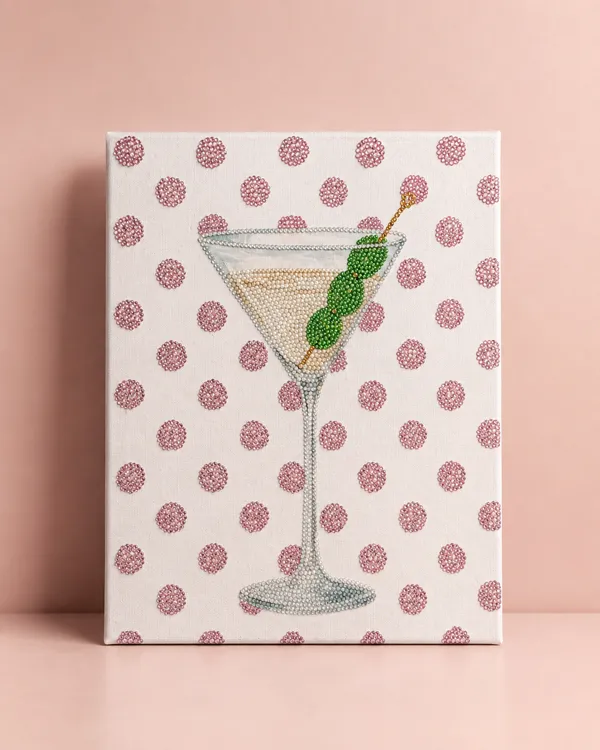
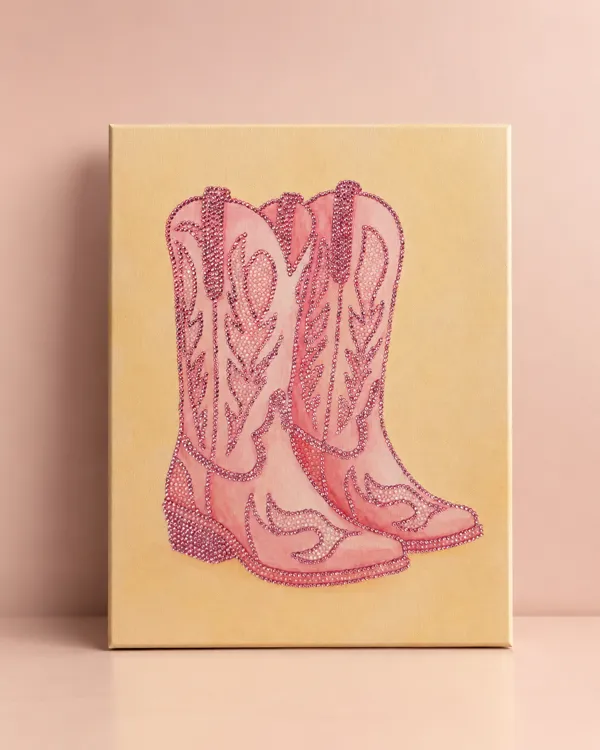
If this is your first time trying diamond art, start with a design and size that feels manageable rather than jumping straight into something huge and highly detailed. Designs with clear color blocks, like our Pink Rodeo or Polka Martini pieces, tend to be a smoother introduction than photo-realistic images with lots of tiny color transitions.
For a full walk-through of your first project, our guide on how to do diamond art for beginners covers everything from unboxing to framing the finished piece.
Frequently asked questions
Is diamond art the same as diamond painting?
Yes. Diamond art and diamond painting are two names for the exact same craft; the terms are used interchangeably.
Do the gems used in diamond art contain real diamonds?
No, the gems are made from high-refraction resin cut with facets, which gives them the sparkle of a cut diamond without any actual gemstone material.
Is diamond art hard to learn?
No. The canvas is numbered to match each gem color, so there's no drawing or freehand skill required, just patience and a steady pace.
How long does a diamond art canvas take to finish?
It depends heavily on the size and detail of the design, but most people spread the work across several relaxed sessions rather than finishing in one sitting.
Can beginners really finish a full canvas?
Yes, as long as you choose a design with reasonably sized, clear color areas to start with, which makes the process faster and less fiddly.
Shall we start your piece?
Premium canvases reinforced with high-refraction gems. Shipping in 24-72 hours.
See the collection