22 June 2026 · 9 min read
Gallery Wall Ideas and How to Hang One Without the Guesswork
Gallery walls have a reputation for being either stunning or a mess, and there's rarely much in between. The good news is that the difference between the two comes down to a handful of planning steps, not innate design talent.
This guide covers the gallery wall ideas that actually hold up in real homes, how to plan your layout before you touch a hammer, and how to hang it so it looks intentional from day one.
Pick a layout style before you pick pieces
There are a few reliable gallery wall structures, and choosing one upfront makes every later decision easier. A grid layout uses same-sized frames in even rows and columns for a clean, symmetrical look. A salon-style layout mixes sizes and orientations for a more relaxed, collected-over-time feel. A linear layout runs pieces in a single row, which suits hallways or narrow walls.
None of these is more correct than the others; it depends on your space and how curated versus casual you want the wall to feel.
What to include in your gallery wall
The most interesting gallery walls mix mediums instead of using only framed prints of the same type. Here are the elements worth considering.
- Photographs. Personal photos add warmth and make the wall feel like yours rather than a showroom display.
- Art prints. Illustrations or fine art prints add color and can anchor the overall palette.
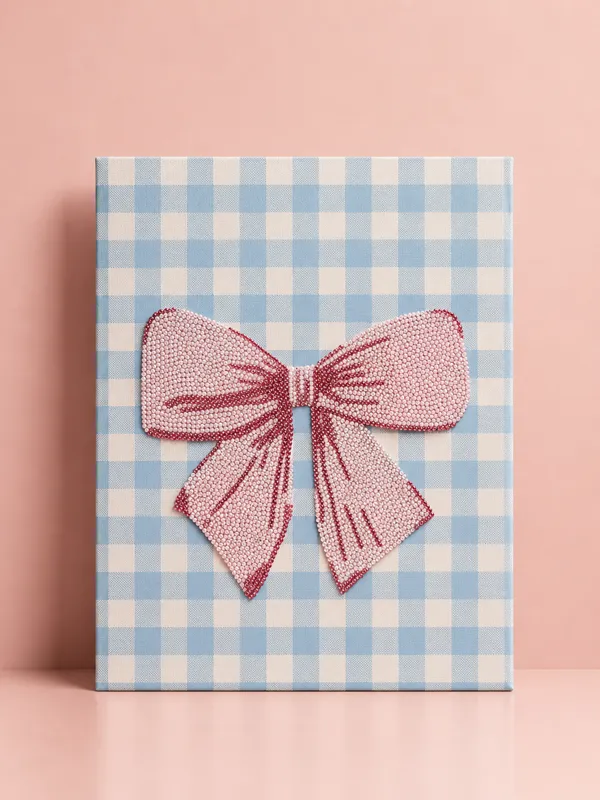
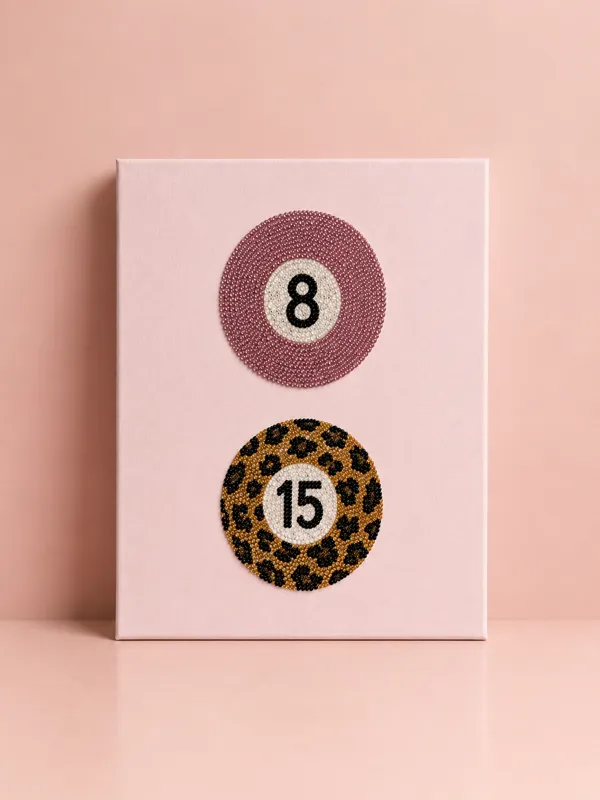
- A diamond art canvas. A framed diamond art piece introduces genuine texture and sparkle that shifts with the light, standing out among flat prints.
- Mirrors. Small mirrors break up the visual weight of frames and bounce light across the wall.
- Objects. A small shelf, a woven piece, or a pressed botanical adds dimension beyond flat rectangles.
How to hang a gallery wall, step by step
This is the part that intimidates most people, but it's really just a sequence of small, careful steps. Here's the process we recommend.
| Step | What to do |
|---|---|
| 1. Trace | Cut kraft paper templates matching each frame's size and shape |
| 2. Arrange on the floor | Lay everything out on the floor in front of the wall until the composition feels balanced |
| 3. Tape it up | Tape the paper templates to the wall to preview the layout at full scale |
| 4. Mark nail points | Mark exactly where each hanger needs to go through the paper |
| 5. Hang from the center out | Start with the largest or most central piece and build outward |
| 6. Adjust | Step back frequently and nudge pieces for even spacing |
Spacing that actually looks intentional
Consistent spacing is what separates a curated gallery wall from a cluttered one. Keeping roughly 5-8 cm between frames throughout the arrangement gives the eye a rhythm to follow, even when the frame sizes vary a lot. Wider gaps than that start to make the pieces feel disconnected from each other.
If your gallery wall runs above a piece of furniture, like a console table or sofa, the same rule from choosing living room wall art applies: keep the total width of the arrangement close to two-thirds of the furniture's width.
Where a diamond art canvas fits in a gallery wall
A finished diamond art canvas brings something a printed photo or poster can't: physical texture. The faceted resin gems used in a diamond art kit catch light differently depending on the time of day and where you're standing, which gives that one piece a bit of movement compared to everything else on the wall.
Designs like Lucky Girls or Polka Martini work especially well as a mid-sized anchor piece in a gallery wall, since their color palettes are punchy enough to hold their own without overpowering the rest of the arrangement. If you haven't finished and framed your canvas yet, our guide on how to frame diamond art covers the best approaches before it goes up.
Color and frame consistency
You don't need every frame to match, but picking one or two finishes, like natural wood and matte black, keeps a mixed-media gallery wall from feeling random. The same logic applies to color: choose two or three recurring tones across the pieces so the eye has something familiar to land on as it moves across the wall.
- Pick a frame palette. Two finishes maximum, repeated across the wall.
- Repeat a color. Choose one accent color that shows up in at least two or three pieces.
- Vary orientation sparingly. Mixing portrait and landscape works, but don't overdo it in a small cluster.
Common gallery wall mistakes
A few habits show up again and again and are worth avoiding from the start.
- Hanging without a plan. Skipping the paper-template step almost always leads to extra nail holes.
- Uneven spacing. Gaps that vary noticeably from piece to piece read as messy rather than relaxed.
- Too much symmetry with mixed sizes. If your pieces vary in size, force a salon-style layout rather than trying to make a strict grid work.
- Hanging too high. Keep the overall visual center of the arrangement around eye level, roughly 145-155 cm from the floor.
Frequently asked questions
How much space should I leave between frames on a gallery wall?
Aim for about 5-8 cm between frames throughout the layout, which keeps the arrangement feeling connected rather than scattered.
What's the easiest way to plan a gallery wall layout?
Cut paper templates matching each frame's size, arrange them on the floor first, then tape them to the wall to preview the composition before hammering any nails.
Can I include a diamond art canvas in a gallery wall?
Yes, a framed diamond art piece adds texture and sparkle that flat prints and photos don't have, and it works well as a mid-sized anchor within a mixed-media layout.
Do all the frames need to match?
No. It generally looks better to limit yourself to one or two frame finishes and repeat a couple of accent colors rather than matching every frame exactly.
What layout works best for a small hallway?
A linear, single-row layout tends to work best in narrow spaces like hallways, since it doesn't require much depth to view properly.
Shall we start your piece?
Premium canvases reinforced with high-refraction gems. Shipping in 24-72 hours.
See the collection